Consumer Research: Marketers Want Data Integration
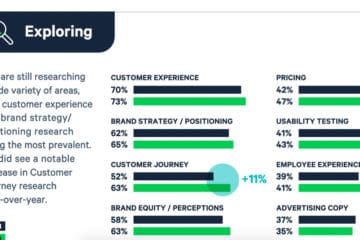
Here’s an infographic from consumer research firm, FocusVision, about a survey of marketers. The findings cover research methodologies used, and pain points when conducting market research.
Effective market research requires multiple streams of data to uncover consumer behavior and motivations. Some are highly-structured and easily quantified. These include conversion rates, ad recall, app behaviors, etc. Others are more open and unstructured. These require either human or algorithmic interpretation to uncover their meaning. Think social media conversation Read more
In my internet wanderings this week, I came upon a Fast Company article from ancient history (2011) from design firm, Method. The theme was parallels between standup comedy and innovation. I like a good analogy article, but a few of their points resonated on their own. Specifically, they relate to the idea of data vs. insights:
(more…)Data Does Not Replace Insight
You Can’t Test Your Way to a Decision
Know Your Audience, Then Ignore Their Advice
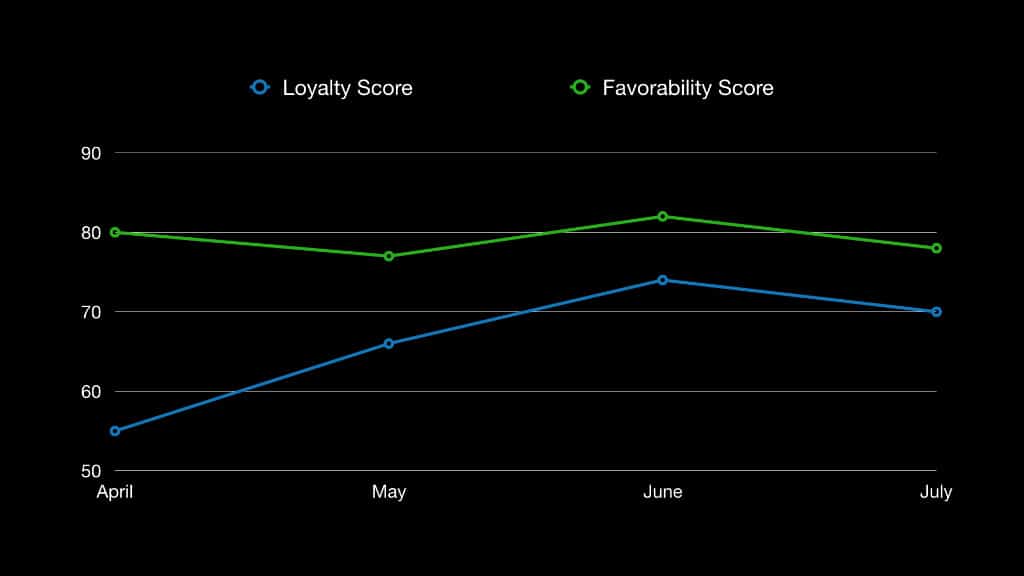
Unlike some other marketing activities, branding can be difficult to measure. It is obvious strong brands inspire customer loyalty. But how can you know how strong your brand is, what factors are helping or hurting it, and how that impacts your business? Monitoring your brand takes some work, but it is doable. Let’s discuss some basics of setting up a brand tracking study.
(more…)The inspiration for a post about building customer loyalty comes from an AdWeek infographic built on research done by Buzzfeed and Wavemaker. For the benefit of those without paywall access, I will summarize a few key take-aways:
First, loyalty varies by product/service category. For example, consumers are much more likely to stick to one brand of tech products (34%) or automobiles (29%), than food (14%) or fashion (14%). Intuitively, this makes sense: it’s easier to conceive of an all-Apple electronics household than one that only wears Ralph Lauren clothes. That takes me to the second key point:
(more…)One of the most common applications of consumer research is creating a customer profile, also known as a target persona. Generally, that means marrying demographic data with insights about behavior and attitudes to build a narrative about who you are targeting.
This has various benefits, chiefly to give a mental grounding point for the rest of the strategy. It’s easier to plan communications with an idea of whom we wish to reach. It also serves as a starting point for testing creative, messaging, etc.–a hypothesis against which we can begin to test and learn. Overall, it is a key foundational piece of any marketing strategy.
In the rest of this article, I will give an overview of how to begin creating a customer profile.
(more…)